You Cannot See Spam Traps, But You Can Find Their Footprints
Spam traps are designed to be invisible. They look like regular email addresses, they accept mail without complaint, and they never send you a helpful notification saying hey, you just mailed a trap. The whole point is that you do not know they are there until the consequences hit you in the form of blacklistings, reputation damage, or unexplained deliverability drops.
But even though you cannot see individual spam traps, you can detect patterns that strongly indicate their presence. Think of it like detecting a gas leak. You cannot see the gas, but you can smell it and use instruments to locate the source. The same principle applies to spam traps: look for the signals, trace them to their origin, and fix the leak.
Signal 1: Sudden Deliverability Drops With No Obvious Cause
Your deliverability was fine last week. This week, your inbox placement dropped by 20% or more. You did not change your content, your sending volume is the same, and your bounce rate looks normal. What happened?
This pattern is a classic indicator of a spam trap hit. Specifically, it suggests you hit a pristine trap, which is the type that causes immediate and severe reputation damage. Pristine trap hits often do not show up as bounces because the trap address accepts the email without error. The damage happens behind the scenes when the trap operator flags your sending domain or IP.
To investigate: check your domain and IP against major blacklists using MXToolbox or similar tools. If you find yourself listed on Spamhaus SBL, SpamCop, or another major list, a spam trap hit is the most likely cause. Also check Google Postmaster Tools for any sudden reputation tier drops.
Signal 2: Zero-Engagement Addresses That Keep Accepting Mail
Pull a report of all email addresses in your database that have received at least 10 emails and have never opened, clicked, or replied to any of them. Now look at those addresses more carefully.
Real people who never engage typically fall into one of two categories: they are ignoring you (but their engagement would show at least one accidental open over many sends), or they moved on and the address is no longer active. Addresses that have been receiving email for months with literally zero interaction signals are suspicious. Some of them may be recycled spam traps that silently accept your emails without any engagement because there is no person on the other end.
The key diagnostic is the combination of zero engagement and continued acceptance. If an address bounced, you would suppress it. If a person was real, you would see at least some sporadic engagement. Zero engagement plus zero bounces over a long period is the fingerprint of a recycled trap or an abandoned mailbox on its way to becoming one.
Signal 3: Engagement Anomalies by Acquisition Source
Segment your email engagement data by how you acquired each contact. If one particular source shows dramatically lower engagement than others, that source may be introducing spam traps into your database.
For example, say your inbound signups show 35% open rates, your LinkedIn enrichment contacts show 25% open rates, and a particular purchased list shows 8% open rates. That purchased list is not just lower quality in general. The extremely low engagement rate suggests a meaningful percentage of those addresses are not real people at all.
Run this analysis regularly. When you add a new data source, monitor its engagement metrics separately for at least 60 days before blending it into your main sending segments. If a new source consistently underperforms by 50% or more compared to your baseline, treat it as a spam trap risk and either stop using it or add extra verification before sending.
Signal 4: Blacklist Listings You Cannot Explain
Getting listed on a blacklist is one of the clearest indicators that you have a spam trap problem. When you check your blacklist status and find yourself listed, the listing reason sometimes provides clues.
Spamhaus listings often include a category code that indicates the type of violation. A listing under SBL (Spamhaus Block List) typically means you hit a pristine trap or are listed because of poor sending practices. A listing under CSS (Composite Snowshoe) might indicate pattern-based detection. The delisting process usually involves explaining what caused the issue and what you are doing to fix it. If you cannot identify any other cause (like a massive complaint spike), a spam trap hit is the most probable explanation.
SORBS, Barracuda, and SpamCop each have their own listing criteria, but spam trap hits are a common trigger across all of them. If you suddenly appear on multiple blacklists simultaneously, that is a strong signal of a pristine trap hit because those traps are often monitored by multiple blacklist operators.
Signal 5: Bounce Rate Anomalies After List Cleaning
Here is a more subtle signal. You clean your list using a verification tool. Your bounce rate drops to a healthy 0.5%. But then over the next few months, your deliverability still slowly declines even though your bounce rate stays low.
This pattern suggests that your list contains spam traps that are passing verification. Pristine traps and recycled traps typically pass standard SMTP verification because the receiving server accepts mail for them. Verification removes invalid and disposable addresses, but it does not catch well-constructed traps. The traps pass verification, you send to them, and your reputation takes damage even though your bounce rate looks clean.
The fix here is to layer engagement analysis on top of verification. After verification removes the obviously bad addresses, engagement analysis removes the suspiciously silent ones. Together, these two approaches catch more traps than either one alone.
The Diagnostic Process: Putting Signals Together
No single signal conclusively proves spam trap presence. But when multiple signals appear together, the probability becomes very high. Here is a structured diagnostic process.
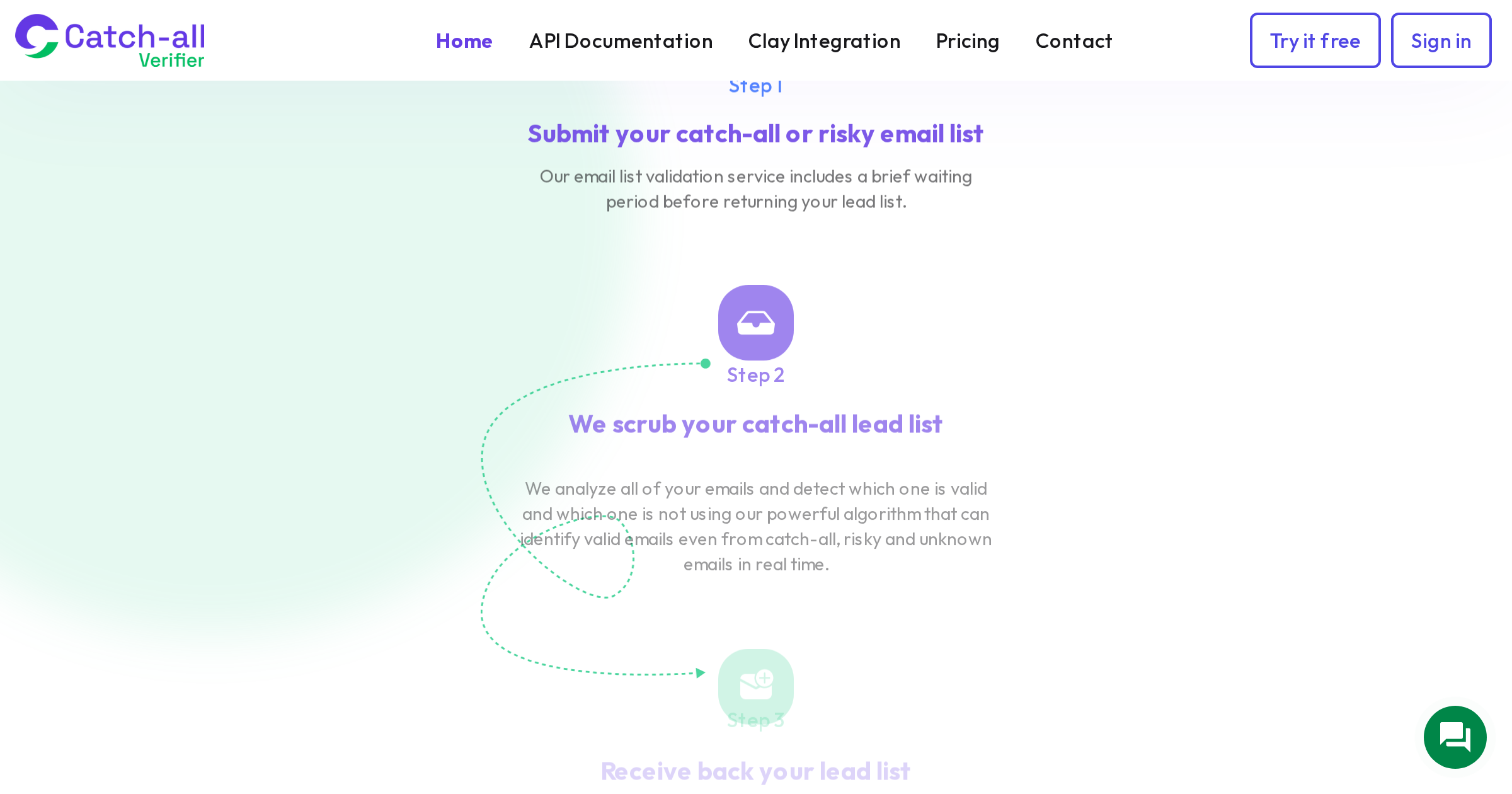
Step 1: Check your blacklist status. Use MXToolbox or a similar multi-blacklist checker. If you are listed anywhere, note which list and when the listing occurred. This gives you a timeline to work with.
Step 2: Audit your data sources. List every source of email addresses in your database: inbound forms, purchased lists, enrichment tools, manual research, event registrations, partner referrals. For each source, note the approximate number of contacts and the date range of acquisition.
Step 3: Analyze engagement by source. For each data source, calculate the average open rate, click rate, and reply rate. Flag any source that is performing 50% or worse than your overall average.
Step 4: Identify zero-engagement cohorts. Find all addresses with 10+ emails received and zero engagement events. Segment these by acquisition source. The source with the most zero-engagement addresses is your most likely trap vector.
Step 5: Check timing. If you can identify when your deliverability started declining, look at what data you added to your list in the 2-4 weeks before that date. New data imports that coincide with deliverability drops are prime suspects.
Step 6: Take action. Remove or quarantine the suspected segments. Run remaining contacts through verification including catch-all resolution. Monitor deliverability for 2-3 weeks after the cleanup. If deliverability improves, you found and removed the source. If it does not improve, widen your cleanup scope.
Professional Spam Trap Detection Services
For organizations that need more certainty, professional services offer direct spam trap detection. Validity (formerly Return Path) maintains one of the largest spam trap networks and offers list screening services. Webbula provides trap detection APIs. These services maintain databases of known trap addresses and can check your list directly against them.
The limitation is that new traps are created constantly, and no database catches 100% of them. These services are best used as one layer in a multi-layer approach alongside verification, engagement analysis, and source auditing.
Prevention Is Better Than Detection
The best approach to spam traps is preventing them from entering your list in the first place.
Never buy email lists. This single practice eliminates the highest-risk source of pristine traps. Implement real-time verification on all forms to catch typo traps at the point of entry. Re-verify your entire database quarterly to catch addresses that are transitioning toward recycled trap status. Sunset contacts that have not engaged in 6+ months after one re-engagement attempt. When using data enrichment tools, verify every address they return before adding it to your sending list.
And when verifying, make sure your tool handles catch-all domains properly. Catch-all domains pass standard verification regardless of whether specific mailboxes exist. A specialized catch-all verification tool like CatchallVerifier resolves these addresses to valid or invalid, removing one more vector through which bad addresses (including potential traps at catch-all domains) can persist in your database undetected.