Building a Lead Scoring Model That Includes Email Verification Status
Most lead scoring models include behavioral signals (website visits, content downloads, email engagement) and demographic data (company size, industry, job title). Almost none include email verification status. This is a missed opportunity.
Email verification status is a direct signal of lead quality and reachability. A lead with a verified valid email is more actionable than one with an unverified or catch-all address. Incorporating this signal into your scoring model helps sales teams prioritize the leads most likely to be contactable and responsive.
Why Verification Status Belongs in Lead Scoring
Consider two leads with identical demographic and behavioral profiles: same company size, same job title, same number of website visits. The only difference is their email verification status. Lead A has a verified valid email. Lead B has an unresolved catch-all email.
Which lead should your sales rep prioritize? Lead A, clearly. The rep can email Lead A with confidence that the message will arrive. Lead B's email might work, or it might silently fail. The rep's time is better spent on the certain contact.
This logic extends to scoring: Lead A should receive more points than Lead B, all else being equal. The verified email is a quality signal that correlates with reachability and conversion probability.
Scoring Framework
Here is a suggested point assignment for different verification statuses:
Verified valid: +10 points. This is a confirmed deliverable address. The lead is contactable by email with high confidence.
Catch-all deliverable (via CatchallVerifier): +8 points. The address has been resolved as deliverable through specialized verification. Slightly lower than standard valid because catch-all domains have inherently higher uncertainty, but the specialized verification provides strong confidence.
Catch-all unresolved: +3 points. The domain is catch-all and the address has not been specifically verified. The lead might be contactable but you are not sure. Lower score reflects the uncertainty.
Risky/Unknown: +1 point. Verification was inconclusive. The lead might be contactable but the risk is elevated.
Invalid: -10 points. The email is confirmed undeliverable. This lead cannot be contacted by email. If email is your primary outreach channel, this lead needs alternative contact information before it is worth pursuing.
Disposable: -15 points. The person used a temporary email, which strongly signals they do not want to be contacted. This is a negative quality indicator beyond just deliverability.
Integrating with Your CRM
In Salesforce, add Email_Verification_Score__c as a number field and include it in your lead scoring formula. In HubSpot, add a HubSpot score property adjustment based on the verification status property. In other CRMs, most lead scoring systems support custom property-based scoring rules.
The verification score should complement your existing scoring model, not replace it. A lead with a perfect demographic fit and strong behavioral signals but an unresolved catch-all email is still a good lead. They just need catch-all verification before email outreach. The lower email score might trigger a workflow to verify the address through CatchallVerifier before routing to a sales rep.
Using Verification Score for Routing
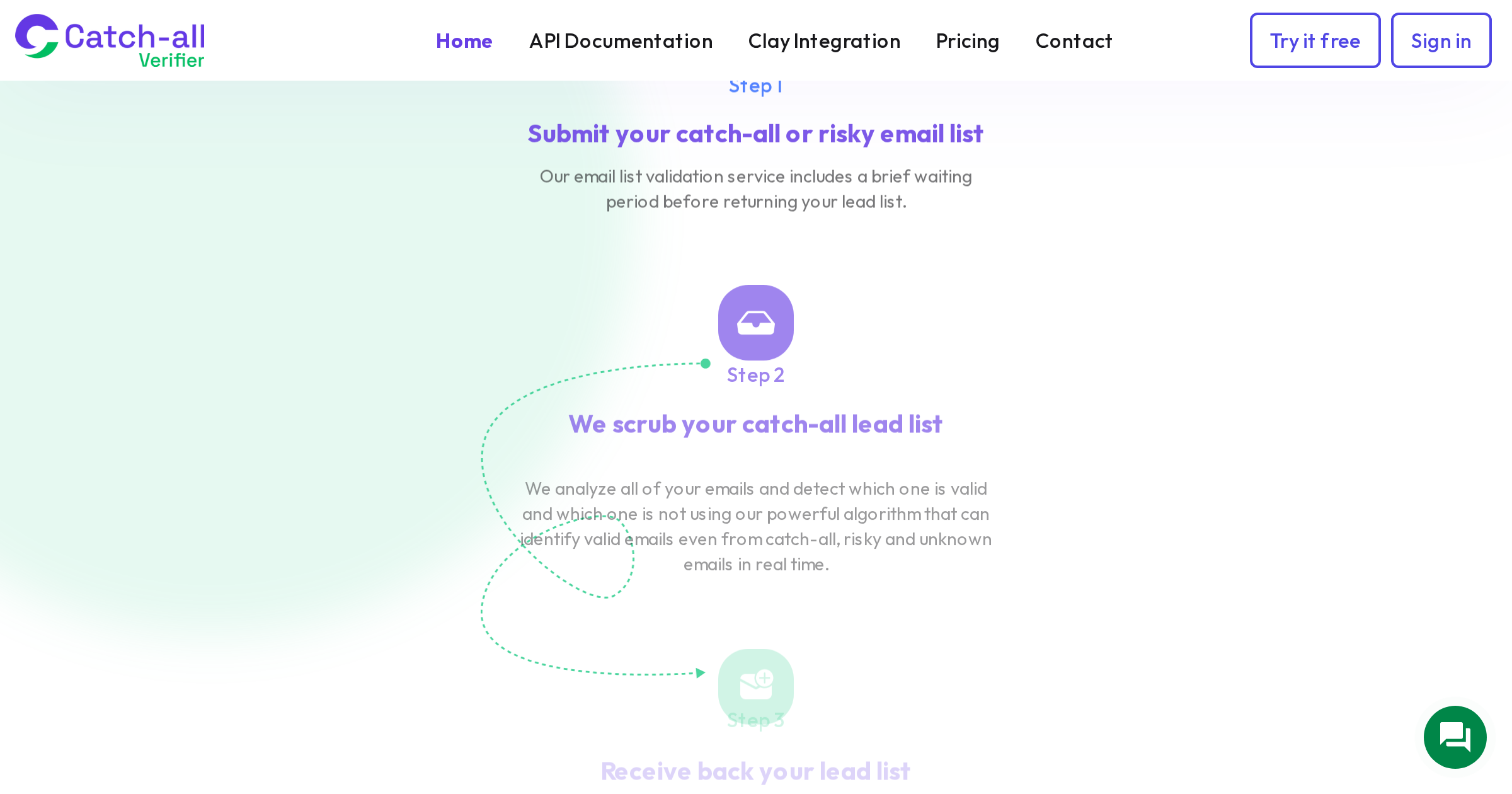
Beyond scoring, use verification status to route leads to appropriate workflows. High-score verified leads go directly to sales reps for outreach. Catch-all unresolved leads get routed through CatchallVerifier first, then to sales if verified deliverable. Invalid leads get routed to an alternative contact enrichment workflow (find a different email, phone number, or LinkedIn profile). Disposable email leads get routed to a re-engagement workflow asking for a permanent email address.
This routing logic ensures sales reps receive leads they can actually contact, while leads with data quality issues get fixed before wasting rep time.
Impact on Sales Efficiency
When sales reps prioritize leads based on a scoring model that includes verification status, they spend less time on uncontactable leads. This translates to: higher connection rates on outreach attempts, shorter time from lead to first meeting, fewer wasted sequence slots on dead email addresses, and better overall conversion rates from lead to opportunity.
The improvement compounds over time. As your CRM accumulates verification data, your scoring model becomes more accurate. You can analyze which verification statuses correlate with actual conversions and adjust your scoring weights accordingly.
Adding email verification to your lead scoring model is a low-effort, high-impact improvement. It takes an hour to configure and immediately improves lead prioritization across your entire pipeline.