Email Verification for Apollo.io Users: Closing the Catch-All Gap
Apollo is one of the most popular B2B prospecting platforms, with a massive database of contacts and built-in email verification. Apollo claims 91% accuracy on its email data, and for standard addresses at non-catch-all domains, this holds up well. The problem is the other 9%, and more specifically, the catch-all segment that Apollo's verification cannot resolve.
Apollo's Verification: What It Does and Does Not Do
Apollo verifies emails through standard methods: syntax checking, domain validation, MX record lookup, and SMTP verification. For most addresses, this produces reliable results. Invalid addresses are flagged, and valid addresses are confirmed.
But when Apollo encounters a catch-all domain (a domain where the mail server accepts all incoming email), it hits the same wall as every other standard verification tool. The server says "yes" to every address, so Apollo cannot distinguish between john.smith@catchall-company.com (a real person) and completely.made.up@catchall-company.com (nobody). Both show as deliverable.
In CatchallVerifier's test of 1,000 Apollo-sourced emails, 86% were valid. That 86% figure is strong, but it means 14% were not deliverable. If you are pulling 10,000 prospects from Apollo per month, roughly 1,400 of those emails will not deliver. That is a lot of wasted outreach effort and potential reputation damage.
Where the Catch-All Gap Hurts Most
Apollo's catch-all gap is most painful when prospecting mid-market and enterprise companies. These are the companies most likely to use catch-all configurations (40% or more of enterprise domains). They are also your highest-value prospects. Missing or bouncing emails to enterprise targets is costly in terms of lost pipeline and wasted sales rep time.
If your Ideal Customer Profile includes companies with 200+ employees, you are almost certainly hitting a significant catch-all segment. Apollo shows these contacts as having verified emails, but the verification only confirms the domain is catch-all, not that the specific address delivers.
Supplementing Apollo with CatchallVerifier
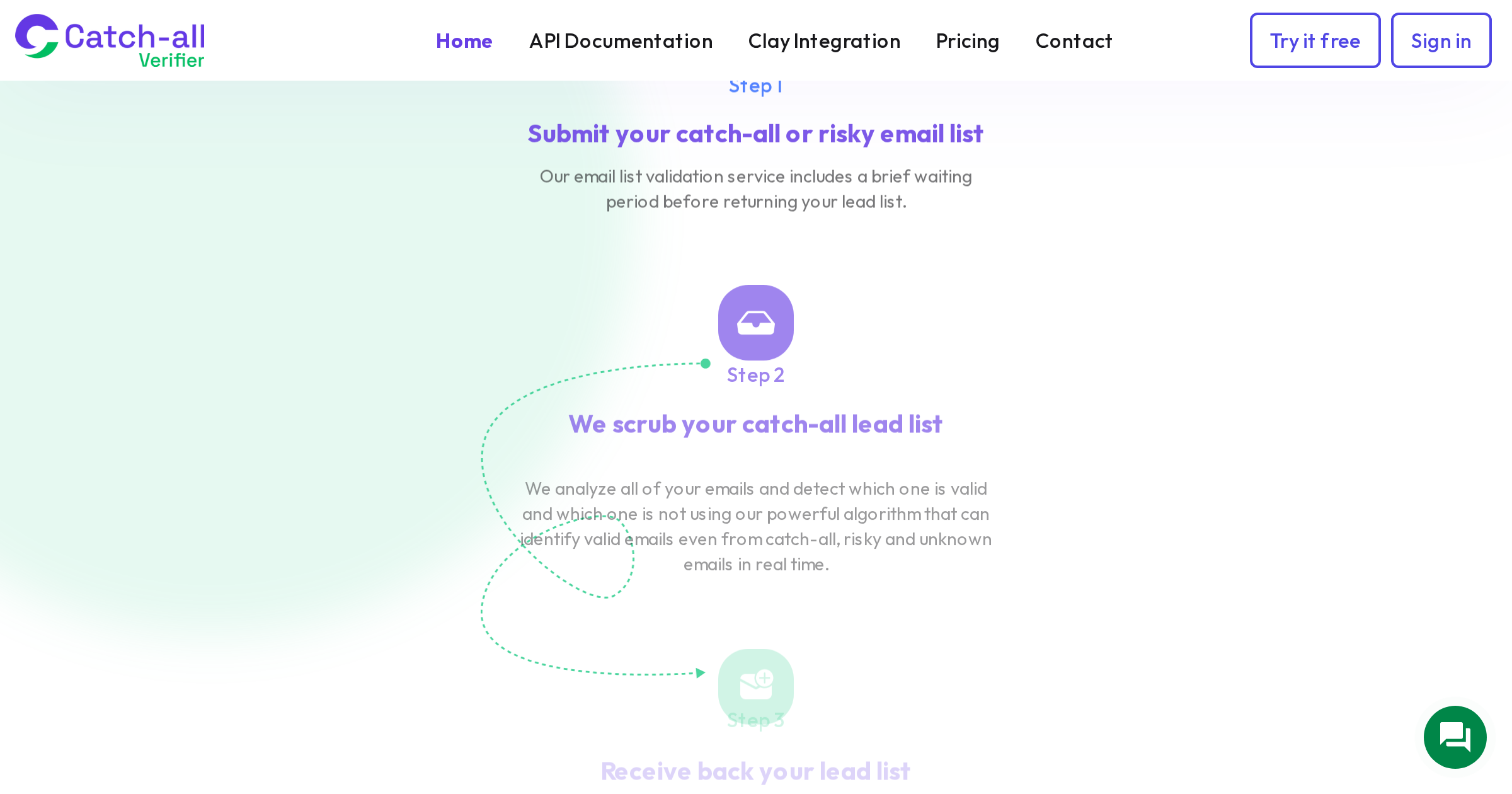
The workflow is straightforward: export your Apollo prospect list, run it through CatchallVerifier, and use the results to filter your outreach list.
Export from Apollo: pull your prospect list as CSV, including the email verification status Apollo assigns. Filter for catch-all: separate the contacts Apollo marked as catch-all or accept-all into their own segment. Verify with CatchallVerifier: upload the catch-all segment for bulk verification. CatchallVerifier resolves each address into deliverable or undeliverable. Merge results: combine your Apollo-verified (non-catch-all) contacts with the CatchallVerifier-confirmed deliverable contacts. This is your final, clean outreach list.
The Math on Recovery
Take a typical Apollo export of 5,000 prospects. Apollo verification results: 3,500 verified valid (70%), 1,250 catch-all (25%), 250 invalid (5%). Without CatchallVerifier, your usable list is 3,500. With CatchallVerifier: of the 1,250 catch-all, roughly 60-75% resolve as deliverable. That is 750-937 additional confirmed contacts. Your usable list grows to 4,250-4,437. That is a 21-27% increase in usable prospects from the same Apollo export.
At $0.005-0.007 per CatchallVerifier credit, verifying 1,250 catch-all addresses costs roughly $6-9. The value of 750-937 additional verified contacts in your pipeline is orders of magnitude higher than that cost.
Ongoing Integration
For teams that pull from Apollo regularly, make CatchallVerifier part of your standard export-and-verify workflow. Every time you pull a new batch from Apollo, run the catch-all segment through CatchallVerifier before adding contacts to your outreach campaigns. This becomes a standard operating procedure that takes minutes and consistently improves your list quality.
If you use Clay alongside Apollo (a common stack), add CatchallVerifier as the final step in your Clay workflow so Apollo-sourced emails get catch-all resolution automatically before hitting your outreach tools.
Apollo is a great prospecting tool. CatchallVerifier makes it better by resolving the one category of addresses Apollo cannot handle on its own. Together, they give you the most complete and verified prospect data possible.